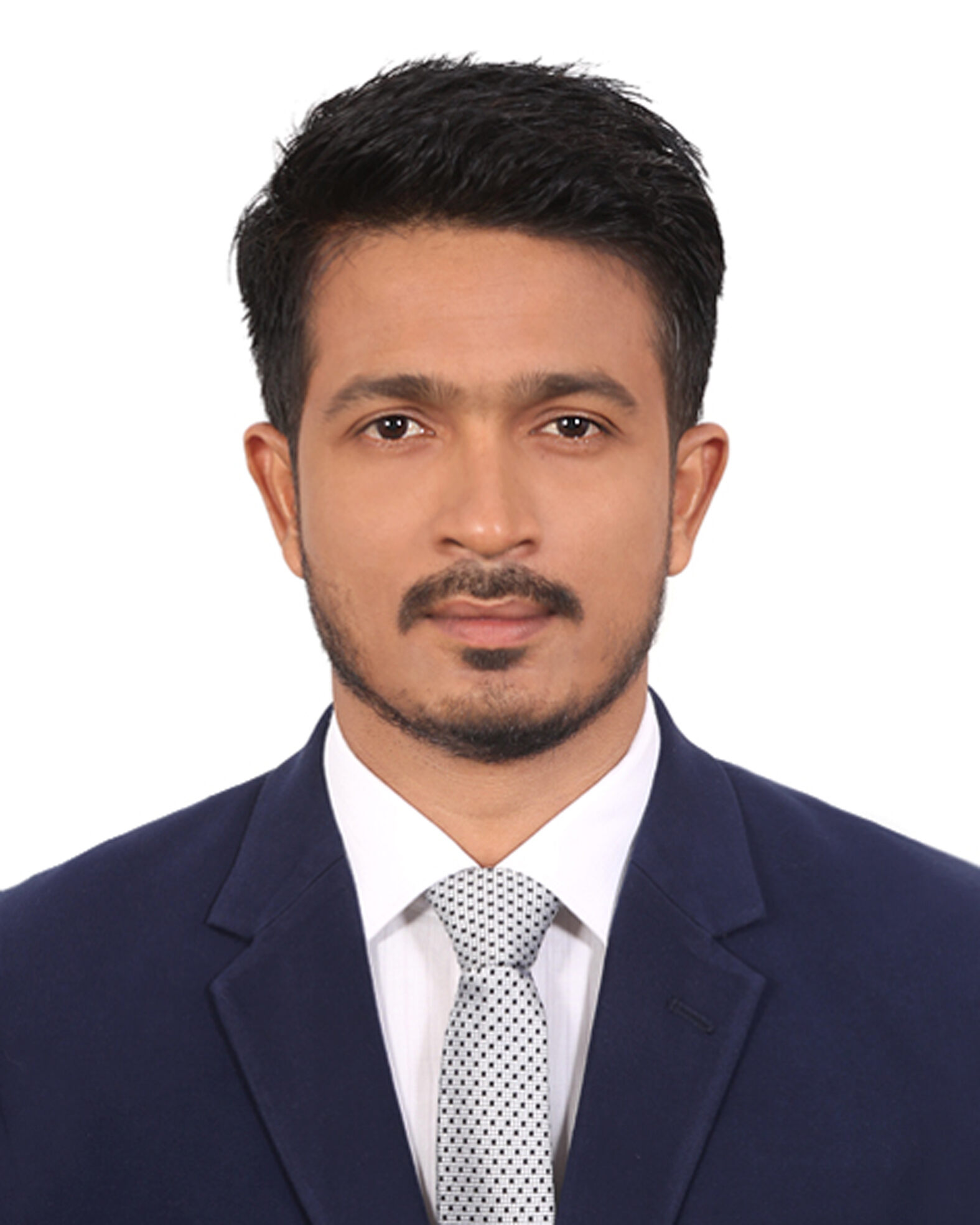
Md. Nesar Rahman Porag
Assistant Professor
.png)
.png)
.png)
.png)
Department of Information and Communication Technology
Faculty of Science & Technology (FST)
porag1010@gmail.com
BANGLADESH UNIVERSITY OF
PROFESSIONALS
Mirpur Cantonment, Dhaka-1216
.png)
Overview
.png)
Education
.png)
Publication
Research Activites
.png)
Awards
.png)
Course Taught
Biography
My core strengths lie in server administration, virtualisation, networking, and full-scale data centre operations and implementation. For the past 10 years, I’ve been deeply involved in information security, working in parallel with infrastructure roles to design and secure critical systems and ensure operational resilience.
Academically, I hold a BSc in Computer Science & Engineering and an MSc in Information & Communication Technology, and I’m currently pursuing a PhD in Cybersecurity. I also serve as an adjunct faculty at Bangladesh University of Professionals (BUP), contributing to the master's programme and mentoring the next generation of IT and security professionals.
To support my practical expertise, I’ve earned globally recognised certifications, including RHCSA, RHCE, CCNA, Microsoft Azure, CEH (Practical), and SOC Analyst—reflecting my commitment to both technical mastery and continuous learning.
With a passion for bridging the gap between IT operations and information security, I’m always keen to connect with like-minded professionals, researchers, and organisations working at the intersection of infrastructure and cybersecurity.
Last Updated: 02 Apr 2026
Education
Last Updated: 02 Apr 2026
Researchs
1.
esearch Overview
My research focuses on the paradigm shift from traditional perimeter-based security to an identity-centric Zero Trust Architecture (ZTA). In an era of sophisticated cyber threats, the "trust but verify" model is no longer sufficient. My work investigates the "Never Trust, Always Verify" principle, specifically focusing on the authentication layer.
Key Areas of Investigation:
Adaptive Multi-Factor Authentication (MFA): Developing dynamic authentication protocols that respond to real-time risk levels.
Continuous Identity Verification: Moving beyond static logins to session-based, continuous monitoring of user behavior.
Micro-segmentation: Analyzing how granular access control prevents lateral movement within a network.
Identity and Access Management (IAM): Strengthening the security of cloud-native and hybrid environments.
Academic Objective
The goal of this research is to develop robust frameworks that protect sensitive institutional and enterprise data by ensuring that security is enforced at the resource level, regardless of the user’s location or network origin.
Last Updated: 02 Apr 2026
Last Updated: 02 Apr 2026
Last Updated: 02 Apr 2026
Last Updated: 02 Apr 2026
Last Updated: 02 Apr 2026
esearch Overview
My research focuses on the paradigm shift from traditional perimeter-based security to an identity-centric Zero Trust Architecture (ZTA). In an era of sophisticated cyber threats, the "trust but verify" model is no longer sufficient. My work investigates the "Never Trust, Always Verify" principle, specifically focusing on the authentication layer.
Key Areas of Investigation:
Adaptive Multi-Factor Authentication (MFA): Developing dynamic authentication protocols that respond to real-time risk levels.
Continuous Identity Verification: Moving beyond static logins to session-based, continuous monitoring of user behavior.
Micro-segmentation: Analyzing how granular access control prevents lateral movement within a network.
Identity and Access Management (IAM): Strengthening the security of cloud-native and hybrid environments.
Academic Objective
The goal of this research is to develop robust frameworks that protect sensitive institutional and enterprise data by ensuring that security is enforced at the resource level, regardless of the user’s location or network origin.
Last Updated: 02 Apr 2026
Last Updated: 02 Apr 2026
Last Updated: 02 Apr 2026